In today’s competitive plastics manufacturing landscape, quality isn’t optional; it’s essential. Whether you’re producing rigid PVC profiles, high‑performance compounds, or color‑rich masterbatches, the uniformity and consistency of your base blends directly influence product performance, aesthetic appeal, and downstream processing efficiency. That’s why modern processors increasingly rely on advanced color mixing solutions for the plastic industry to enhance product quality while optimizing throughput and reducing waste.
This article explores how cutting‑edge mixing technologies, especially purpose‑built plastic compounding mixer solutions, elevate quality in PVC compounding and broader plastics applications.
Why Mixing Matters: The Starting Point for Quality
Before raw PVC resin ever reaches an extruder or molding machine, it must be thoroughly blended with plasticizers, stabilizers, fillers, pigments, and other additives. Inadequate mixing leads to uneven distribution of materials, which can manifest as visual defects, inconsistent mechanical properties, and uneven color throughout the final product.
Quality begins with plastic compounding solutions that ensure each component is:
- Accurately dispersed at the molecular level
- Held in stable suspension throughout the compound
- Integrated into a homogenous blend before processing
For PVC processors, achieving this level of consistency is critical. Reliance Mixers’ PVC industry offerings are engineered to provide precisely that, helping manufacturers maintain strict quality standards from batch to batch.
What Are Advanced Color Mixing Solutions?
At the heart of successful PVC and plastic compounding operations are industrial mixers equipped to handle demanding formulations and maintain tight tolerances. Advanced color mixing solutions for industry encompass technologies that can:
- Disperse pigments and additives evenly throughout the base resin
- Create a controlled shear environment for uniform compounding
- Minimize heat hotspots that cause degradation
- Reduce cycle times and improve processing stability
These solutions aren’t “one‑size‑fits‑all.” They span everything from high‑shear mixers to cooling systems, each designed with engineered internal tools, precise drive components, and intelligent control systems.
Reliance Mixers, for example, integrates sophisticated mixing systems engineered specifically for PVC applications, ensuring reliable performance and consistent results that downstream processes, like extrusion or calendering, can depend upon.
The Role of Mixing Technology in Product Quality
High Shear and Precision with High Intensity Mixer & Cooling Mixer Systems
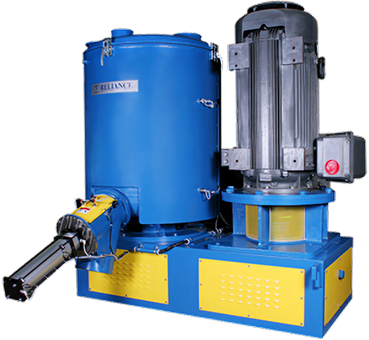
Two critical technologies that stand out in quality‑focused compounding are High Intensity Mixer & Cooling Mixer setups. When used together, these systems provide both powerful blending and controlled cooling essential for processing heat‑sensitive plastics like PVC.
High Intensity Mixers generate strong shear forces and frictional heat to thoroughly disperse pigments, stabilizers, plasticizers, and fillers throughout the polymer matrix. With optimized tip speeds and engineered internals, these mixers break down agglomerates and ensure each additive is properly wetted and distributed.
However, shear and frictional heat are only part of the story. Once the blending phase is complete, the compound must be cooled quickly and uniformly to lock in the dispersion and prepare the material for downstream handling. This is where Cooling Mixers, engineered with robust jackets, flow‑optimized jackets, and large discharge openings, make a significant difference. Rapid and even cooling preserves material integrity, improves bulk density consistency, and reduces the risk of thermal degradation.
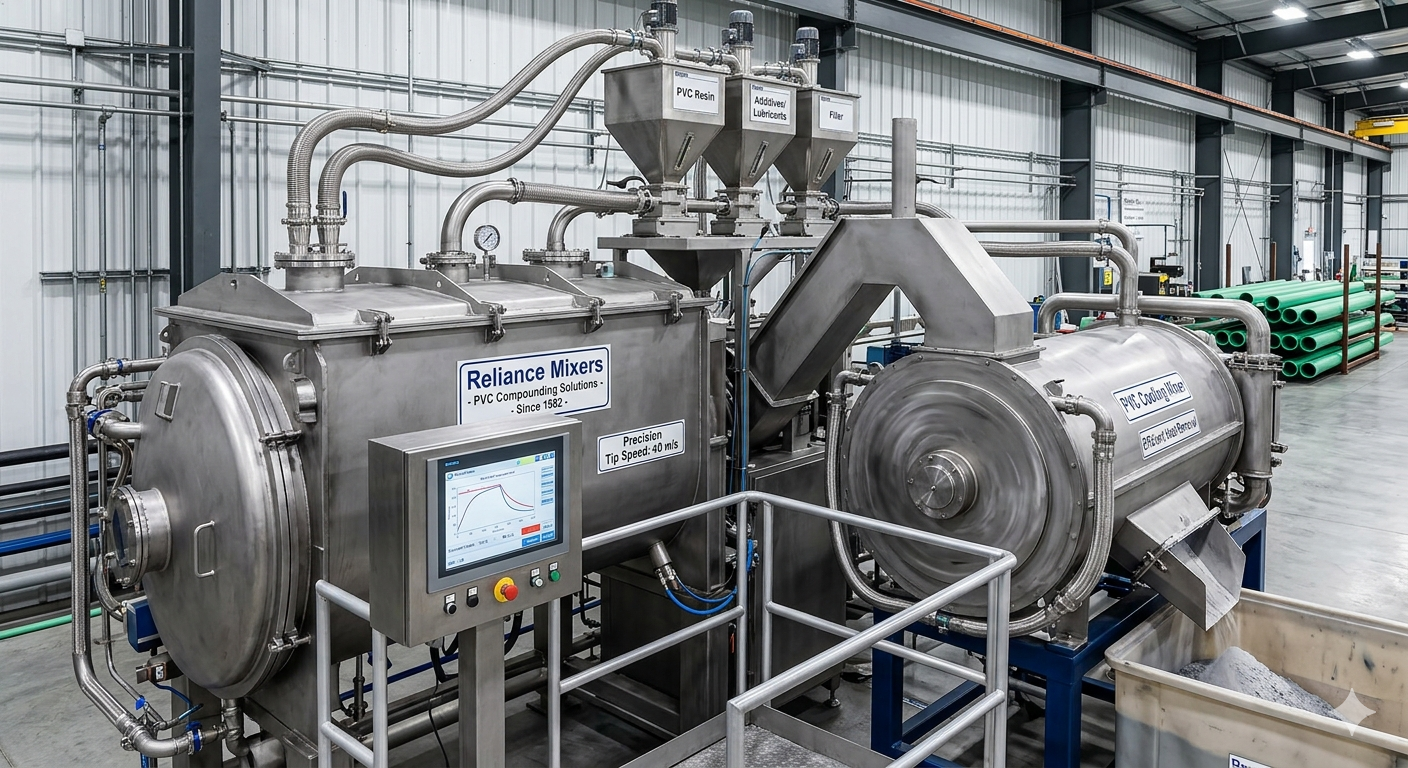
The combination of these two technologies, a reliable High Intensity Mixer & Cooling Mixer system, is at the core of effective PVC compounding. It allows manufacturers to manage heat, shear, and cooling with precision, directly translating into superior final product properties.
From Pigments to Performance: What Happens in the Mixer
When raw PVC resin enters a high‑intensity compounding system, the process is carefully staged:
- Resin Heating and Opening
The PVC resin is gently heated, and its pores open, allowing better absorption of additives. - Controlled Additive Introduction
Plasticizers, stabilizers, and fillers, including pigments, are added at defined temperatures to enhance dispersion. - High‑Shear Mixing
The specialized internals within a high‑intensity mixer rapidly shear and blend materials, minimizing dead zones and ensuring a deep vortex flow throughout the mix. - Cooling & Stabilization
Once blended, the material moves into a Cooling Mixer where it is quickly brought to critical temperatures below, stabilizing the dispersion and preparing the compound for handling or extrusion.
This structured approach reduces batch variation, enhances color consistency, and produces predictable material characteristics, all of which contribute to superior finished products.
How Reliance’s PVC Industry Solutions Deliver Value
To make high‑quality compounding a reality, investments in the right equipment are essential. Reliance Mixers supports PVC and plastic processors with engineered mixing systems that deliver:
- Consistent, repeatable results across production runs
- Fast cycle times with controlled heating and cooling
- Reduced product variation and defects
- Enhanced pigment and additive dispersion
- Scalable solutions from lab‑scale to full production
Learn more about the full lineup of PVC‑specific mixing systems at https://www.reliancemixers.com/pvc-industry/, where detailed specifications and expert support options are available for your evaluation.
Whether you need comprehensive Plastic compounding mixer solutions for new installations or are upgrading to advanced mixing technology, the right equipment can be the difference between merely meeting standards and setting them.
Conclusion: Better Mix, Better Product
In the plastics industry, quality starts long before final shaping or extrusion; it starts with how materials are prepared and blended. Advanced color mixing solutions for industry, driven by effective plastic compounding solutions and the synergy between high‑shear mixing and efficient cooling, significantly improve product quality, reduce defects, and enable consistent production performance.
Investing in plastic compounding mixer solutions with engineered features and solid technical support ensures that your PVC compounds and finished plastics aren’t just adequate; they’re exceptional.
Explore Reliance’s PVC mixing systems and see how smarter mixing leads to stronger products and more reliable manufacturing outcomes.