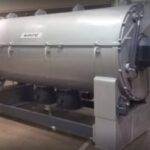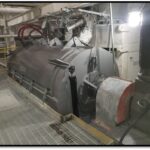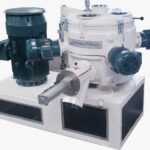
In high-performance industrial mixing, consistency, control, and efficiency depend on more than just motor power or mixing speed. Critical components such as the High Intensity Mixer Lid, High Intensity Mixer Discharge, and High Intensity Mixers Tools in North America play a key role in maintaining batch integrity, improving cycle efficiency, and supporting long-term operational reliability.
For manufacturers across North America working with plastics, pigments, elastomers, and specialty materials, understanding how these components are designed and why they matter ensures predictable, repeatable production results.
Role of the High Intensity Mixer Lid in Industrial Mixing
The High Intensity Mixer Lid in North America is engineered to handle demanding operating conditions, including high shear forces and elevated internal temperatures. Its main purpose is to maintain a sealed, controlled mixing environment throughout the process.
Key design considerations include:
- Leak-proof sealing to prevent material loss during high-speed mixing
- Stainless steel construction to resist wear, corrosion, and thermal stress
- Smooth internal surfaces to minimize material buildup and simplify cleaning
In North American production facilities with frequent batch changes and long operating hours, a well-designed mixer lid ensures process stability while supporting efficient maintenance.
High Intensity Mixer Discharge: Faster Throughput, Cleaner Operations
Once mixing is complete, efficient material removal is critical. The High Intensity Mixer Discharge system directly impacts cycle time, material recovery, and cleaning effort between batches.
High-performance discharge systems are designed to:
- Allow complete and rapid material evacuation
- Reduce material retention and dead zones
- Support faster turnaround between production runs
A properly engineered High Intensity Mixer Discharge helps manufacturers maintain consistent batch quality while minimizing waste and downtime, especially in applications with pigments, additives, or color-sensitive materials.
High Intensity Mixers Tools: Ensuring Uniform Blending
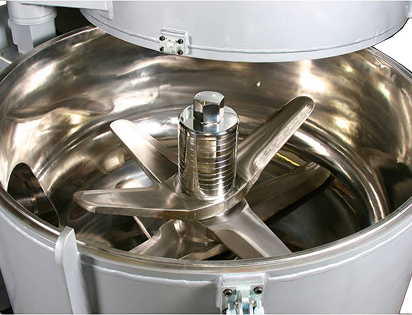
At the heart of every high-intensity mixing process are the High Intensity Mixers Tools, which control how materials are lifted, fluidized, and dispersed inside the mixing bowl.
These tools are designed to:
- Create a deep vortex flow pattern for uniform blending
- Break down agglomerates without compromising material integrity
- Maintain consistent dispersion across short mixing cycles
With wear-resistant coatings and self-cleaning profiles, these tools ensure reliable performance across repeated production runs. Correct tool configuration is essential for achieving repeatable results in high-shear applications.
North American Design Considerations
Manufacturing environments across North America demand high-output mixing systems without compromising reliability or safety. Equipment must perform consistently under continuous operation while supporting efficient cleaning, maintenance, and process control.
The integrated design of the High Intensity Mixer Lid, High Intensity Mixer Discharge, and High Intensity Mixers Tools ensures a controlled mixing environment, complete material discharge, and uniform dispersion across every batch.
For manufacturers evaluating high-intensity mixing equipment, focusing on component-level engineering reduces downtime, improves batch repeatability, and supports consistent output across demanding industrial processes.
Why Component Design Matters
High-intensity mixers are used in applications where precision, speed, and repeatability are critical. Poorly designed lids can cause material loss or contamination. Inefficient discharge systems slow production. Inadequate tool geometry can lead to uneven dispersion.
By prioritizing robust component design, including the High Intensity Mixer Lid, optimized High Intensity Mixer Discharge, and application-specific High Intensity Mixer Tools, manufacturers can improve:
- Batch-to-batch consistency
- Production throughput
- Equipment longevity
- Overall process control
This component-level focus separates standard mixers from true high-performance industrial systems.
Conclusion: Engineering for Reliable High-Intensity Performance
High-intensity mixing success is built on engineering details that only become obvious when they fail. From lid sealing and discharge efficiency to mixing tool configuration, every component contributes to consistent output and long-term reliability.
Manufacturers seeking dependable solutions for demanding applications can explore the High Intensity Mixer page or view the full range of industrial mixing solutions on the Reliance Mixers homepage. Choosing systems with proven component designs ensures optimal mixing performance that meets the pace of modern North American production.