Ever wondered why some of your PVC products have flawless colour consistency while others show streaks or uneven hues? Poor mixing causes up to 15% waste in extrusion and injection moulding.
Next-generation plastic compounding mixer solutions fix this by providing precise shear, accurate temperature control, and uniform blending, all of which are essential for advanced industrial colour-mixing solutions.
Decoding the Challenges of Plastic Compounding
Plastic compounding means mixing base plastics like PVC with additives, fillers, pigments, and stabilisers to achieve the required material properties. In PVC processing, it is important to spread colour pigments evenly, because if the colour is not mixed well, it may cause defects in the product pipes and films.
But Traditional mixers fall short in some aspects when it comes to mixing:
- Low shear fails to break pigment clumps, dragging cycle times to 10+ minutes.
- Hot spots exceed 110°C, degrading colours and resins.
- Inconsistent blending spikes defect rates by 8-10%.
What if you could overcome the defects, boost throughput by 15%, and improve colour accuracy? With modern tech, you can solve this problem.
High-intensity mixers with 40 m/s properly mix PVC powders without causing overheating and staged heating (stabilisers at 85-90°C, plasticisers at 100-110°C) make it possible, and to avoid the damaging of pigment, maintain the temperature throughout the mixer, within ±2°C.
Evolution of Plastic Compounding Mixers
Early mixers used a mechanical mixing method, which limited the production speed and mixing quality. But in the 1980s, High-intensity mixers emerged, introducing tip speeds up to 40 m/s for PVC compounding, reducing blend times to under 6 minutes.
Next-generation advancements came up with the following:
- CFD-optimised flow patterns for enhanced heat transfer and material circulation.
- PLC-controlled automation for real-time monitoring of amps, temperature, and timers.
- Integrated heating-cooling combos with full-jacketed designs and larger discharge gates for cycles under 6 minutes.
Twin-screw alternatives handle volume but lack custom colour precision. Reliance’s systems excel here, pre-heating resin to 80-85°C before pigments for clump-free results.
Key Features of Advanced Plastic Compounding Solutions
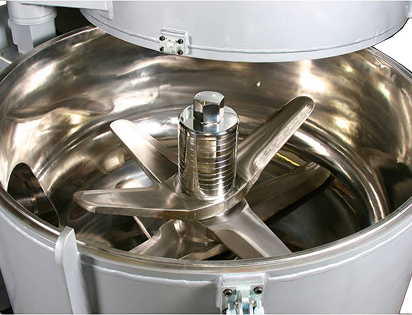
Reliance Mixers delivers plastic compounding solutions through high-intensity and cooling mixer combinations that are designed for PVC. These systems achieve heating rates of 3-4°C per minute and tip speeds precisely at 40 m/s.
- Shear control for superior pigment dispersion that helps with easy dryblends.
- Enhanced coling design with full jacket coverage of the lid and cylindrical body.
- Optimised flow patterns validated through CFD analysis.
- Available cooling cone technology for vertical configurations.
- The steel thickness of the inside cylinders is doubled in size.
These mixers help give accurate colour as they work well with masterbatch at about 2% by volume, which helps reduce waste and defects during injection moulding or extrusion.
Precision Colour Mixing in Compounding
In plastic compounding, high-shear mixers break the pigment lumps so colours can spread smoothly.
- The resin gets heated up at 80–85°C before adding pigment, which stops clump formation.
- Temperature is controlled and kept within ±2°C, which helps maintain bright, consistent colour.
- Blade speed limit is up to 40 m/s.
- Colours are mixed in masterbatches quickly and evenly.
Case studies show that the colour difference between batches varied from 8% to 2%, and the cycle time decreased by 4 minutes, and annual throughput increased by 15% in PVC pipe extrusion. This accuracy improves product quality, such as better gloss in films and stronger UV resistance in outdoor products.
Material Performance Enhancements
Beyond colour, next-gen mixers boost fusion, dehumidification, and stability. Reliance’s 50% larger discharge gates ensure rapid flow at ideal gel levels for smooth downstream processing.
- Energy-efficient heat control for temp-matched materials.
- Flexibility for custom recipes.
- Enhanced flow, stability, gloss, and UV resistance.
Tired of inconsistent performance? Upgrade with Reliance mixers to see 15%+ gains.
Why Reliance Mixers Excel
Reliance Mixers specialises in plastic compounding, and our integrated systems are specifically engineered to meet the demands of PVC compounding, delivering measurable improvements in cycle time and blend quality. Reliance Mixers provides advanced colour mixing solutions for industry.
- Mixing cycles are complete in 6 minutes, with better blending, and the temperature remains within ±2°C
- Mixing blades, cooling systems, and controls are designed in such a way that it matches the resin, pigments, and production.
- Engineers help with installation and startup, and that helps in reducing problems that take place during remote support from overseas suppliers.
If you can expect fast ROI from superior blends and minimal downtime. Why settle for less?
Conclusion
The future of PVC compounding is well managed by an AI-powered control system, static maintenance, and hybrid mixing systems. Reliance comes with precision plastics compounding solutions where consistent colour and premium material quality deliver reliable performance backed by U.S.-based engineering support.
“Ready to upgrade your PVC compounding mixer solutions from Reliance?
Connect with Reliance Mixers today. Their engineering team will help you design a solution that meets your goals without compromise.”