
Since 1982, Reliability in
Every Batch
Proven Mixing Solutions for PVC
Compounding Excellence
Optimizing Your PVC Production Through Advanced Mixing Technology
For over 40 years, Reliance Mixers has partnered with PVC processors to deliver consistent, high-quality dry blends. Our engineering team understands the critical relationship between mixing parameters and final product properties, helping you achieve optimal results while maximizing throughput with our specialized High Intensity Mixer & Cooling-Mixers systems
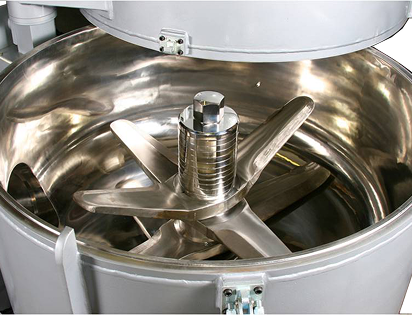
Technical Advantages for PVC Processing
Heating/Cooling Mixer Combinations
Our integrated systems are specifically engineered to meet the demands of PVC compounding, delivering measurable improvements in cycle time and blend quality.
Key Performance Metrics:
- Uniform material distribution throughout the mixing vessel.
- Tip speeds up to 40 m/s for optimal shear and dispersion.
- Cooling cycles consistently finish prior to Mixer Discharge temperature being reached.
- Fast and efficient discharge of Materials from Mixer and Cooler.
Process Optimization for PVC
Explore our complete range of High Intensity Mixer & Cooling-Mixers solutions designed specifically for PVC processing applications.
Temperature-Staged Addition Protocol
Our control systems enable precise ingredient addition at optimal temperatures:
- Initial resin heating.
- Stabilizer and Processing Aid Addition.
- Plasticizer and Lubricant Addition.
- Filler Addition.
- Discharge to Cooler.
Enhanced Cooling Design Features
- Full jacket coverage of Lid and Cylindrical Body.
- Optimized flow patterns validated through CFD analysis.
- Available cooling cone technology for vertical configurations.
- Up to twice the Steel Thickness of inside cylinders compared to European competitors.
Domestic Support Advantage
Operating from our Texas facility provides significant benefits:
- Replacement parts available from US inventory.
- Direct access to application engineers.
- On-site commissioning and training.
- Rapid response for technical support.
Case Study: PVC Pipe Manufacturer
Challenge: Inconsistent gelation levels affecting extrusion stability
Solution: Reliance FM-500 with precision temperature control
Results:
- Batch-to-batch variation reduced from 8% to 2%
- Cycle time decreased by 4 minutes
- Annual throughput increased by 15%
Frequently Asked Questions
How do plastic compounding solutions improve product quality?
Plastic compounding solutions enhance product quality by ensuring uniform distribution of additives and fillers, thereby improving material strength, consistency, and surface finish. By optimizing blend homogeneity before processing, PVC compounding solutions help reduce defects and enhance final product performance for extrusion and molding applications.
Why is temperature control critical in PVC plastic compounding?
Since PVC is sensitive to heat and can degrade if mishandled, effective plastic compounding solutions use frictional heat and cooling jackets to maintain precise thermal ranges. This prevents the material from burning and ensures stabilizers activate correctly to protect the polymer.
What are advanced color mixing solutions for industrial plastic applications?
Advanced color mixing solutions for industry use high-shear tools to break down pigment clumps. This creates a deep vortex that spreads colorants evenly through the resin, eliminating streaks and ensuring vibrant, consistent shades even in very dense plastic formulations.
What features should effective plastic compounding solutions include?
Reliable plastic compounding solutions should feature wear-resistant tools, precise speed control, and efficient discharge mechanisms. High-grade stainless steel surfaces and leak-proof seals are also vital to prevent contamination and maintain a clean, safe industrial environment during high-volume runs.
How do high-intensity mixers enhance PVC compounding efficiency?
High-intensity mixers use fast tip speeds to generate rapid frictional heat, which significantly shortens cycle times. When combined with advanced color mixing solutions for industry, they provide quick homogenization and faster discharge, increasing total throughput while lowering energy expenses.