If you’ve ever walked over to a cooling rack only to find a batch of parts with patchy color or weird streaks, you know exactly how frustrating rotomolding can be. On a hot, busy factory floor, even a tiny oversight in how you’ve prepped your powder can snowball into a mountain of rejected product.
The truth is, good enough mixing doesn’t cut it anymore. Understanding the mechanics behind a rotomolding mixer, specifically how high-speed and high-intensity systems actually move material, is the difference between guessing and knowing. These systems aren’t just fancy upgrades; they’re the backbone for anyone who needs their colors to pop, their batches to stay consistent, and their scrap pile to stay empty.
Why Your Current Blend Might Be Failing
Most shops start with simple tumble blenders or basic ribbon mixers. While these are fine for moving large granules around, they lack the bite required for modern pigments. Pigments are naturally clumpy. They form agglomerates that want to stay together. Without enough mechanical force, those clumps survive the mixing process and show up as ugly specks on your finished part.
This is where a High Intensity Mixer for Color Dispersion changes the game. Instead of just tumbling material, it uses a high-velocity impeller to create a mechanical storm. This isn’t just about speed; it’s about wetting out the pigment so it becomes one with the polymer.
How a High-Speed Rotomolding Mixer Works
So, how does a rotomolding mixer work differently? It all comes down to the physics of the vortex.
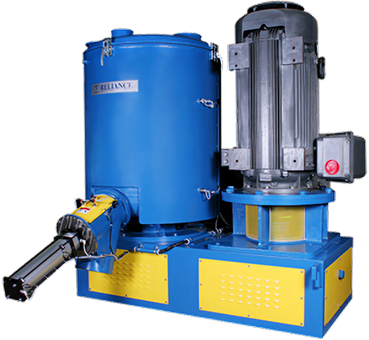
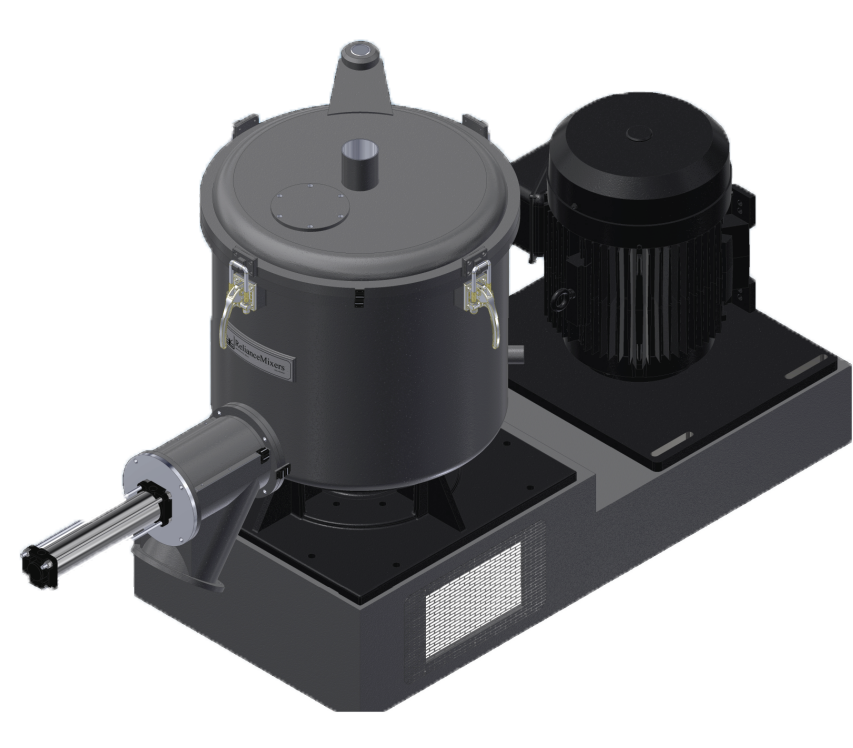
When you put your resin and pigments in a Reliance High Intensity Mixer, the special blades rotate at very high tip speeds. This movement generates a strong vortex that first draws the material from the bottom, then throws it against the walls, and finally feeds it again through the center.
Key stages of the process include:
- De-agglomeration: The high-speed blades smash pigment clumps into sub-micron particles.
- Frictional Heating: The intense movement creates controlled friction, warming the resin particles just enough so they become tacky.
- Encapsulation: The pigment doesn’t just sit next to the resin; it actually embeds into the surface of the plastic.
By using a High-speed mixer for color dispersion, you’re ensuring that when the powder melts inside the mold, the color is already baked into the DNA of the plastic.
Why Reliance Mixers Leads the Industry
In an industry where standard equipment often fails to meet the demands of a high-pressure shop, Reliance Mixers is built for the actual grit of the factory floor. They know that in a rotomolding plant, a mixer has to survive constant dust, intense heat, and non-stop cycles without breaking a sweat.
Here is why operators and owners actually choose our gear:
- Zero “Dead Zones”: Our vessels are engineered so every single ounce of material is constantly moving. You won’t find unmixed pockets hiding in the corners; everything gets processed equally.
- Built for Abrasives: They don’t just use standard metal. Our impellers feature high-grade stainless steel and specialized wear-resistant coatings to handle the toughest additives without wearing down.
- Engineered, Not Just Assembled: They don’t just sell a motor in a tank. You’re getting a solution backed by decades of polymer science and engineering.
- Reliability You Can Trust: When you put a Reliance Mixer on your floor, you’re adding an asset that’s designed to be the most dependable part of your production line.
Real-World Success: Slashing Scrap Rates
They recently worked with a mid-sized molder who was losing nearly 15% of their Granite effect outdoor furniture to color inconsistencies. They were using a low-speed paddle mixer and trying to fix the problem by adding 5% more pigment, which only made the parts more brittle.
After they integrated a Reliance High-speed mixer for color dispersion, the results were immediate. Not only did the speckling disappear, but they were able to reduce their pigment load by 8% because the dispersion was so much more efficient. Their scrap rate dropped from 15% to less than 2% in the first month. The mixer didn’t just pay for itself; it started generating profit.
Optimizing Your Mix: Pro Tips for Operators
To get the most out of your High Intensity Mixer for Color Dispersion, keep these pillars in mind:
- Vessel Loading: Don’t overfill. These mixers need headspace to create the vortex. Usually, 60-70% capacity is the sweet spot.
- Sequence: Turn on your mixer and stir up the resin before adding the pigment. This way, the color meets a moving target and spreads out immediately.
- Temperature Monitoring: Watch your heat. You want enough friction to bond the pigment, but not so much that you start agglomerating the resin itself.
Conclusion: Elevate Your Rotomolding Quality
At the end, your customers don’t care how hard you worked; they care how the product looks. If you’re tired of chasing color issues or throwing money into the scrap bin, it’s time to look at your mixing tech. A high-intensity approach ensures that every batch is as perfect as the first.
Ready to see the difference a precision blend can make? Explore our full line of Rotomolding Mixers here or contact us today for a custom quote. Let’s make your colors pop, and your scrap rates drop.
FAQs
How does a rotomolding mixer work compared to a standard blender?
A standard blender just tumbles material. A rotomolding mixer uses high-speed mechanical shear and friction to break down pigment clumps and bond them directly to the resin particles.
Can a High Intensity Mixer for Color Dispersion handle heat-sensitive resins?
Yes. The mixers are equipped with accurate temperature sensors along with cooling features so that you can find exactly the right temperature for your pigment bonding without the risk of overheating your base material.
Will a high-speed mixer for color dispersion reduce my pigment costs?
Almost always. Because the mixer disperses pigment more efficiently, you can often achieve a deeper, more vibrant color using 5-10% less pigment than you would with a low-speed mixer.
How long is a typical mix cycle?
Depending on the batch size and material, a high-intensity cycle usually takes between 3 and 8 minutes. It’s significantly faster than traditional tumbling methods.
Is it difficult to clean the mixer between color changes?
Not with a Reliance design. They build our mixers with highly polished stainless steel and a clean internal geometry that eliminates traps, making wash-downs and color swaps fast and easy.