In industrial processing, mixing is not just a step; it’s a defining factor in product quality, efficiency, and scalability. From plastics and powder coatings to specialty compounds, the ability to achieve uniform blending under controlled conditions directly impacts downstream performance.
However, as formulations become more complex and production demands continue to scale, standard mixing systems often fall short. Variations in material behavior, temperature sensitivity, and batch requirements require a more precise and adaptable approach.
This is where customized industrial mixers come into play. Engineered not for general use, but for specific materials, processes, and production goals.
Where Standard Mixers Fall Short
Traditional mixers are built to handle a wide range of applications, but this flexibility often comes at the cost of precision. In high-performance environments, even small inconsistencies in mixing can lead to:
- Uneven dispersion
- Batch-to-batch variability
- Increased material waste
- Longer processing cycles
These inefficiencies are especially noticeable in industries where uniformity is critical. As a result, manufacturers are beginning to prioritize customized mixers that can deliver controlled, repeatable outcomes under demanding conditions.
How High-Intensity Mixing Improves Process Control
High-intensity mixing introduces a more engineered approach to material processing. Instead of relying on basic blending, these systems apply controlled mechanical energy to ensure uniform particle interaction and faster dispersion.
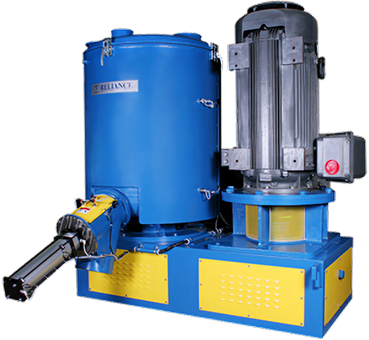
Reliance high-intensity mixers are designed to optimize this process by focusing on:
- Precise shear control
- Efficient material circulation
- Balanced heat generation
- Consistent mixing intensity
This becomes particularly valuable in applications such as color dispersion, additive blending, and polymer compounding, where both speed and precision are essential.
Why Customized Industrial Mixers Deliver Better Results
The key difference with customized industrial mixers lies in their ability to adapt to material behavior. Rather than forcing a formulation into a fixed system, the equipment is engineered around how the material responds to mixing conditions.
Typical customization elements include:
- Blade geometry tailored for specific shear profiles
- Adjustable tip speeds to control mixing intensity
- Integrated cooling systems for temperature-sensitive materials
- Optimized chamber design for uniform flow
This level of control allows manufacturers to maintain consistency while improving efficiency, even as production scales.
Engineering Approach Behind Reliance High-Intensity Mixers
An effective mixing system starts with understanding the process, not just the equipment. Reliance high-intensity mixers are developed with a focus on real-world application requirements, including material flow dynamics, thermal sensitivity, and throughput targets.
By aligning design with operational conditions, these systems can:
- Reduce cycle times
- Improve dispersion quality
- Minimize rework and waste
- Deliver consistent batch performance
Instead of overprocessing materials, the system applies energy where it’s needed, improving both efficiency and output reliability.
For a deeper look at how these systems are designed, you can explore:
https://www.reliancemixers.com/high-intensity-mixer/
Scaling Production Without Compromising Quality
As production volumes increase, maintaining consistency becomes more challenging. Systems that perform well at smaller scales often struggle when pushed to higher capacities.
Customized mixers address this by being engineered with scalability in mind. By matching mixing parameters to production goals, manufacturers can expand operations without introducing variability or instability.
In practice, this results in:
- Consistent product quality across larger batches
- Reduced downtime and process interruptions
- Improved operational efficiency
- Greater confidence in long-term production stability
For manufacturers looking to optimize both performance and scalability, working with an experienced industrial mixing solutions manufacturer becomes a critical advantage.
Choosing the Right Mixing Approach
Selecting the right system is less about specifications and more about alignment with the process. Factors such as material characteristics, production volume, and desired outcomes play a significant role in determining the effectiveness of a mixing solution.
A well-designed system should not only meet current requirements but also adapt to evolving production needs over time.
Final Thoughts + Next Step
As manufacturing demands continue to evolve, mixing systems must move beyond standard configurations and toward precision-driven design. Customized industrial mixers, particularly advanced solutions such as Reliance high-intensity mixers, enable manufacturers to achieve consistent, scalable, high-quality production outcomes.
If you’re evaluating ways to improve mixing efficiency, reduce variability, or scale production with greater control, it may be worth exploring how a more tailored approach can support your process.
Explore high-intensity mixing solutions here!